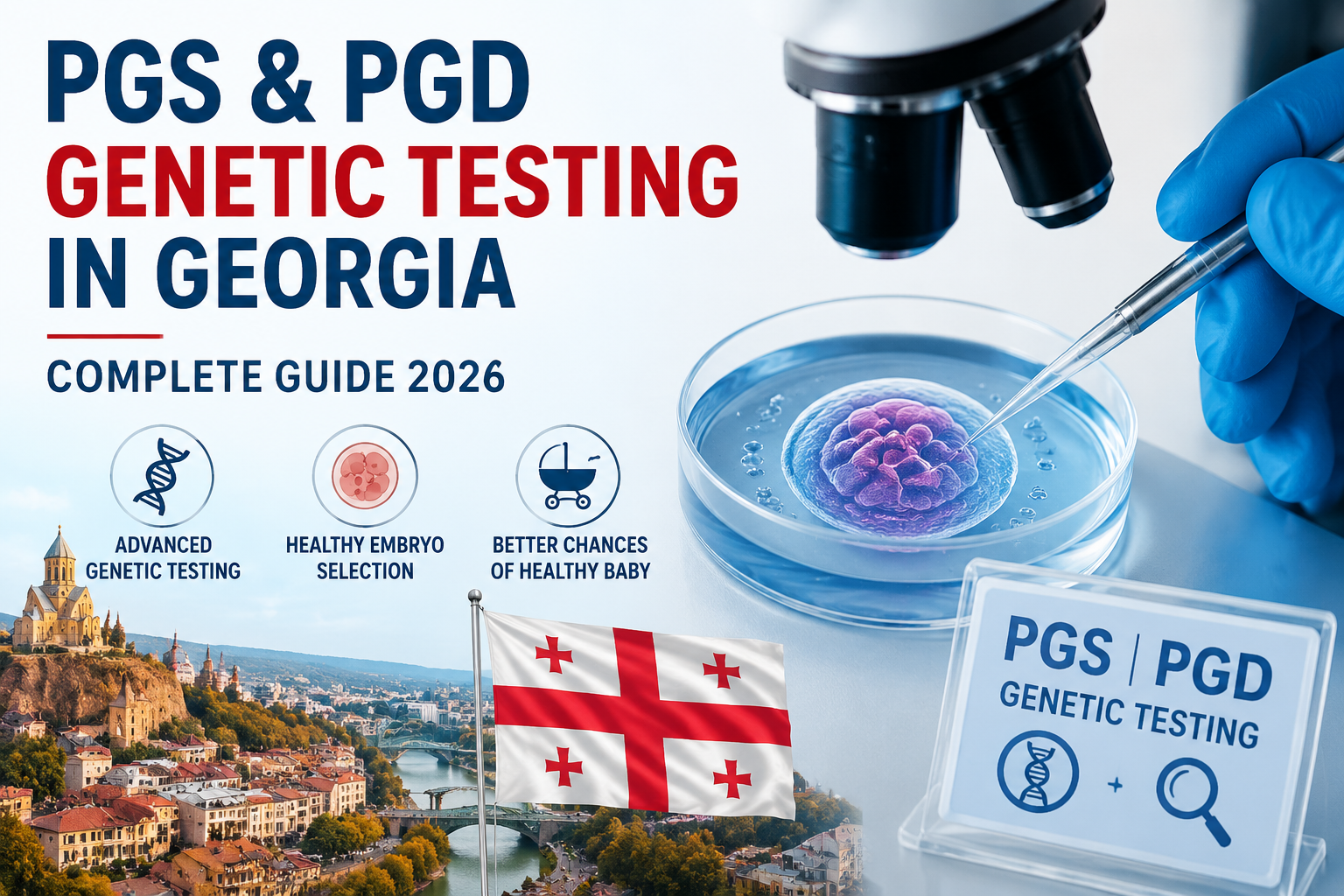
Advancements in reproductive medicine have made it possible for couples to increase their chances of having a healthy baby through genetic screening techniques. Among the most important innovations are PGS (Preimplantation Genetic Screening) and PGD (Preimplantation Genetic Diagnosis).
Georgia has become one of the popular destinations for fertility treatments due to its modern IVF clinics, advanced laboratories, and comparatively affordable costs. This guide explains everything you need to know about PGS & PGD genetic testing in Georgia in 2026. What is PGS (Preimplantation Genetic Screening)?
PGS is a laboratory technique used during IVF (In Vitro Fertilization) to screen embryos for chromosomal abnormalities.
Purpose of PGS:
- Detect abnormal number of chromosomes (aneuploidy)
- Improve IVF success rates
- Reduce risk of miscarriage
- Increase chances of healthy pregnancy
👉 In simple words: PGS checks whether the embryo has the correct number of chromosomes before implantation.
What is PGD (Preimplantation Genetic Diagnosis)?
PGD is a more specific genetic test used to detect inherited genetic disorders in embryos.
Purpose of PGD:
- Identify genetic diseases like cystic fibrosis, thalassemia, or sickle cell anemia
- Prevent passing hereditary disorders to children
- Select healthy embryos for implantation
👉 In simple words: PGD checks whether the embryo carries a specific genetic disease.
Difference Between PGS and PGD
| Feature | PGS | PGD |
|---|---|---|
| Full Form | Preimplantation Genetic Screening | Preimplantation Genetic Diagnosis |
| Focus | Chromosome number | Specific genetic diseases |
| Purpose | General screening | Disease detection |
| Usage | IVF embryos | IVF embryos with genetic risk |
Why Choose Georgia for PGS & PGD Testing?
Georgia is becoming a major fertility destination due to:
- Advanced IVF clinics and laboratories
- Experienced fertility specialists
- Affordable treatment compared to Europe/USA
- High success rates in IVF programs
- Legal and accessible fertility services
Many international patients travel to Georgia specifically for IVF with genetic testing.
PGS & PGD Procedure Step-by-Step
1. IVF Treatment Starts
Eggs are collected from the female partner and fertilized with sperm in a lab.
2. Embryo Development
Embryos are allowed to grow for 3–5 days.
3. Biopsy of Embryo
A few cells are carefully taken from each embryo.
4. Genetic Testing (PGS/PGD)
- PGS checks chromosomes
- PGD checks specific genes
5. Embryo Selection
Healthy embryos are selected for transfer.
6. Embryo Transfer
Selected embryo is implanted into the uterus.
Success Rate of PGS & PGD in Georgia
Success depends on:
- Age of the mother
- Quality of embryos
- Clinic expertise
On average, IVF with genetic testing can significantly improve success rates compared to standard IVF cycles.
Cost of PGS & PGD in Georgia (2026 Estimate)
Costs vary by clinic, but generally include:
- IVF cycle
- Embryo biopsy
- Genetic testing
- Embryo transfer
👉 Georgia is known for being more affordable than USA or Western Europe, making it a popular choice for fertility tourism.
Benefits of PGS & PGD Testing
- Higher chances of successful pregnancy
- Reduced risk of genetic diseases
- Lower miscarriage rates
- Better embryo selection
- Emotional and financial savings in long term
Who Should Consider PGS & PGD?
These tests are recommended for:
- Couples with repeated IVF failure
- Women with recurrent miscarriages
- Older maternal age (35+)
- Families with known genetic disorders
- Couples wanting genetic screening for safety
Risks and Limitations
Although highly advanced, there are still some limitations:
- Expensive additional procedure
- Not 100% guaranteed success
- Small risk of embryo damage during biopsy
- Ethical considerations in embryo selection
Conclusion
PGS and PGD genetic testing are powerful tools in modern fertility treatment. In Georgia, these services are widely available with advanced medical technology and competitive pricing. For couples struggling with infertility or genetic risks, these procedures offer hope for a healthy pregnancy and a safe future baby.