
Trusted IVF in Georgia | Personalized Fertility Treatment for International Patients
IVF Treatment in Georgia with Unneva
Trusted IVF Treatment in Georgia for International Patients
Georgia has become a popular destination for IVF treatment and fertility care for international patients seeking personalized reproductive treatment. The country offers access to specialized fertility clinics providing in vitro fertilization (IVF), egg donation, and surrogacy programs.
For intended parents researching IVF in Georgia, important factors include treatment options, clinic experience, legal requirements, and IVF treatment costs in Georgia. Unneva helps international patients explore fertility treatment options and navigate the process of receiving reproductive care in Georgia.
What is In Vitro Fertilization (IVF)?
In vitro fertilization (IVF) is an assisted reproductive treatment in which eggs are retrieved from the ovaries and fertilized with sperm in a laboratory. Following fertilization, a resulting embryo may be transferred to the uterus as part of the IVF treatment process.
IVF treatment in Georgia may be an option for:
- Couples experiencing fertility challenges
- Women seeking assisted reproductive treatment
- International patients exploring IVF in Georgia
- Intended parents considering egg donation and IVF
- Individuals researching fertility treatment options in Georgia
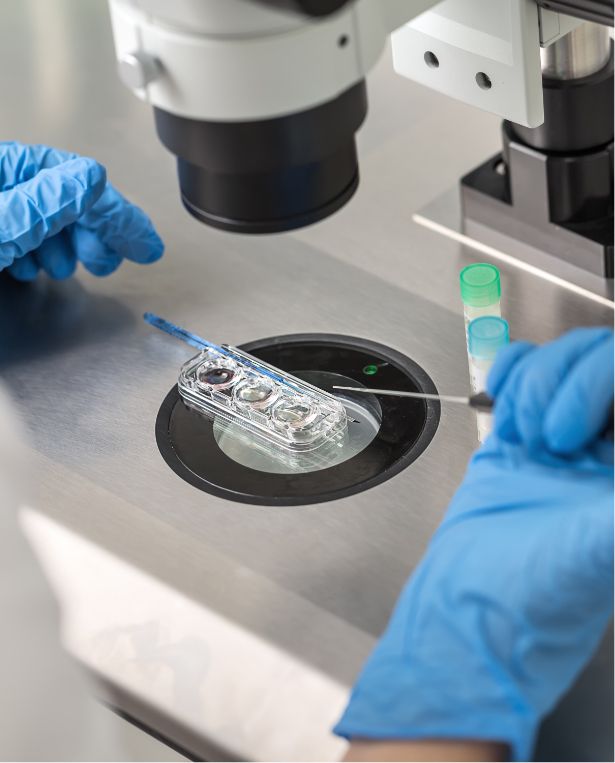
Stages of the IVF Process
Ovarian Stimulation: Hormonal medication is administered so that the ovaries produce several eggs instead of just one, increasing the chances of success.
Egg Retrieval: The eggs are collected through an outpatient procedure known as follicular aspiration.
Fertilization: The eggs are combined with sperm in the laboratory. Sometimes ICSI (intracytoplasmic sperm injection) is used, where a single sperm is injected directly into the egg.
Embryo Culture: The embryos are developed in the laboratory for several days, with their progress monitored to select the most viable ones.
Embryo Transfer: One or more embryos are transferred to the uterus (either the patient’s own or a surrogate’s). If the embryo implants successfully, pregnancy begins.
Pregnancy Confirmation: About 14 days later, a test is carried out to confirm whether implantation and pregnancy have occurred.
Advantages of Doing IVF in Georgia
✅ Clear and favorable legal framework: Since 1997, Georgia has permitted and regulated IVF, gamete donation, and surrogacy.
✅ High medical quality: Modern clinics with highly trained professionals.
✅ Competitive costs: More affordable than in many Western European countries or the United States.
✅ Wide range of additional services: Including egg and sperm donation, cryopreservation, and legal surrogacy.
✅ Support for international patients: Many clinics and agencies are prepared to work with foreigners, offering legal assistance and translation services.
Georgia as a Global Fertility Destination
Thanks to its advanced legislation, Georgia has become a point of reference for fertility treatments not only in Eastern Europe or Asia but worldwide. The possibility of undergoing egg donation, signing a legally valid surrogacy contract, and registering the baby’s birth with all necessary documentation makes many people choose Tbilisi as the main destination to begin their parenthood journey.

Conclusion
In vitro fertilization in Georgia offers the ideal combination of legality, medical effectiveness, and professional support. With a solid legal framework, high-quality clinics, and reasonable costs, the country has become one of the most attractive destinations for those seeking a safe and successful alternative to building a family.